When I was a child, I can honestly say I had two tremendous fears – sharks and tornadoes. I’m talking, like, full-out hysteria; I was convinced that our irrigation ponds were infested with sharks and wouldn’t go near them, and anytime we had a bad storm, I would curl up in the bathtub in my clothes and cry.
I’m not exactly sure why I deemed the bathtub a safe spot if a tornado would hit, but I did. I guess my fear erased all logic, because the sensible thing to do would have been to go in our root cellar that was entirely underground. It’s gone now, but that makes a bit more sense in retrospect.
Seeing as Ontario weather is more unpredictable than Canadian politics, and summer storms have made their mark already, I thought I would educate myself, and in turn, you, on the topic of tornadoes. This information comes from weather.gov.
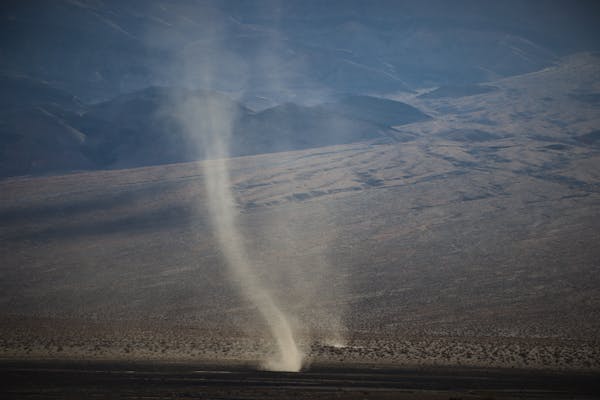
“Tornadoes are violently rotating columns of air, extending from a thunderstorm, which are in contact with the ground. Tornadoes develop when wind variations with height support rotation in the updraft. As seen below, tornadoes come in different sizes, many as narrow rope-like swirls, others as wide funnels.
“They are ranked using the Enhanced Fujita scale. The majority of tornadoes which occur are classified as a weak tornado. Usually a weak tornado will last for just a few minutes and have wind speeds of 100 mph or less. Some tornadoes intensify further and become strong or violent. Strong tornadoes last for twenty minutes or more and may have winds of up to 200 mph, while violent tornadoes can last for more than an hour with winds between 200 and 300 mph!
“The key atmospheric ingredients that lead to tornado potential are instability – warm moist air near the ground, with cooler dry air aloft and wind shear – a change in wind speed and/or direction with height. An unstable airmass promotes the development of strong updrafts, while wind shear will further increase the strength of the updraft, and promotes the rotation from which tornadoes are produced,” the web page explains.
If you ever find yourself caught in a tornado, your best bet is to stay in an underground area, like a basement. If you don’t have this option, it is recommended to go into a room without windows as low to the ground as possible.
Image from https://images.pexels.com/photos/9345986/pexels-photo-9345986.jpeg?auto=compress&cs=tinysrgb&w=600
 ontheedgeofeverything