Yesterday’s post introduced all of you to a curious creature known as the fossa. That is, unless, you’re far more cultured than me and had already heard of them, in which case, good for you, David Suzuki.
I’m not bitter.
Anyways, today’s post will continue our discussion of the fossa in hopes of educating anyone like myself who isn’t overly familiar with them. This information comes from wired.com.
“5. Fossas communicate largely through scent glands. Both males and females occupy territories that they scent mark with secretions from glands on their chests and under the base of their tails. Fossas mark rocks, trees, and the ground to communicate and keep track of each other. Their glands also release a pungent smell when the animal is irritated or frightened.
“6. They also make several kinds of sounds. Fossas mainly vocalize during the breeding season. Females mew to attract males, and males sigh when they have found a receptive female and yowl when competing for her affections.
“7. They are agile climbers. The fossa’s long, slender tail provides balance as it moves through the trees, and its semiretractable claws and flexible ankles allow it to climb up and down trees head-first. The fossa walks flatfooted on the soles of its feet, like a bear, in a method of locomotion known as ‘plantigrade.’ This gives them extra balance and stability when leaping from branch to branch.
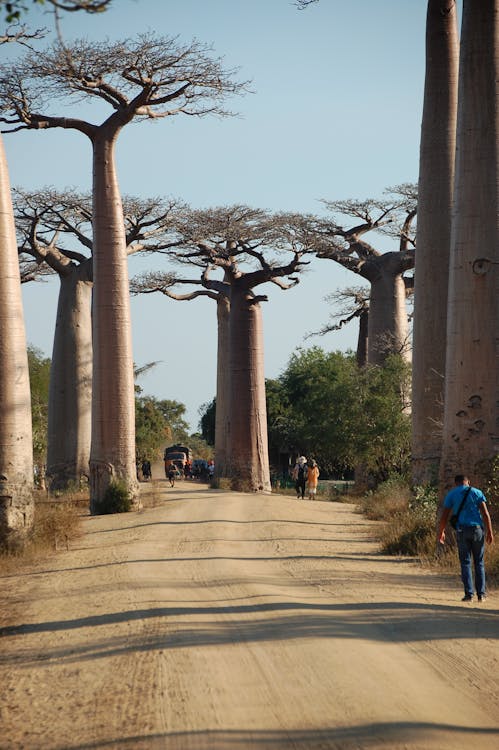
“8. Fossas like forests. Fossas are widespread throughout forested areas of Madasgascar, although their population densities are usually low. They can be found at elevations above 2,000 meters.
“9. Female fossas are temporarily masculine. The female fossa undergoes a strange developmental stage during adolescence known as transient masculinization, unique to fossas. She develops an enlarged, spiky clitoris that resembles the male’s penis, and secretes an orange substance on her underbelly which is usually only seen in mature males. Adult females lack these features. It’s unclear what purpose this transient masculinization serves, but scientists hypothesize that it protects juvenile females from either sexual harassment by adult males or aggression from territorial females.
“10. Fossas have an unusual mating system. A receptive female occupies a site high in a tree, below which males will congregate and compete for mating rights. She may choose to mate with several of her suitors over the next week, and bouts of copulation may last for several hours. This lengthy mating is partly due to the backwards-pointing spines on the male’s penis, which results in a copulatory tie that is difficult to break. Once the first female has left, a new female will take over the mating site. The same trees are frequently used year after year. This mating system, in which a female monopolizes a site and chooses her mates, seems to be unique among carnivores,” the web page explains.
There ya have it, folks; now we know a bit more about the fossa.
 ontheedgeofeverything