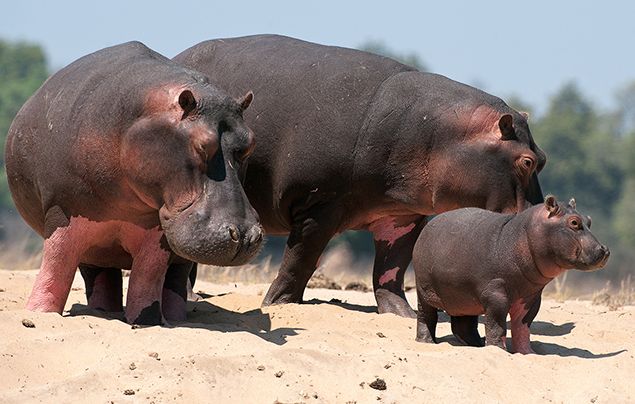
If you thought an animal as majestic as a hippopotamus was only getting one sole blog post entry, you’ve got another thing coming to you, my friend.
That might be a slightly aggressive way to begin a post, but a strong opening hook is usually recommended in the writing realm, so please forgive me.
Like I stated in yesterday’s post, today is a continuation of our discussion of hippos. Don’t fret if you missed the former post – you should be able to navigate the latter without much issue.
Again, this information comes from natgeokids.com.
“5) Hippos are most active at night, when they forage for food. They are herbivores, and eat mostly grass – and boy do they eat grass! In just one night, they can guzzle down up to 35kg of their favourite grub!
“6) Despite their enormous size, hippos are great swimmers and can hold their breath for up to five minutes underwater. When completely submerged, their ears and nostrils fold shut to keep water out.
“7) Hippos usually live in groups (or ‘herds’) of around ten to 20 individuals, led by one large dominant male. The other members are females, their young and a few young non-breeding males.
“8) Dominant males are very protective over their group. To warn off rival males, they open their huge mouths and display their long, curved canines! They also make loud grunts and aggressive splashes in the water.
“9) Female hippos, called cows, give birth every two years, usually to a single calf. Soon after birth, the mother and her baby join up with other cows and calves for protection against predators, such as crocodiles, lions and hyenas.
“10) In the wild hippos live for around 40 years. In captivity, they tend to live longer and may reach up to 50 years old,” the web page explains.
Let’s hear it for the mighty hippo.
Photo by Chris Stenger on Unsplash
 ontheedgeofeverything